
Chinatown Kuala Lumpur Malaysia 马来西亚唐人街
Petaling Street or Chinatown is in the heart of Kuala Lumpur. It is the heart of the capital city and that is where you will find all types of everything you can imagine.
Kuala Lumpur’s Chinatown, which is based in Petaling Street, is also known as ‘Chee Cheong Kai’, which means ‘Starch Factory Street’, homage to its roots as a tapioca producing suburb. Today, it is Kuala Lumpur’s own Chinatown where you can find all things Chinese from herbs to dry goods and toys to clothes. The entire street is closed to traffic during the afternoons as traders set up stalls to peddle various merchandise, food and electronics.
The street is always a hive of activity as the traders know not the meaning of being tired, as they relentless pursue customers, shouting out prices as visitors pass by the stalls. Around the area, there are also traditional Chinese shops that sell medicine, herbs and roots. Do bear in mind that the area is frequently jammed, so taking a train from any LRT station is recommended. You disembark at the Pasar Seni station and walk on foot for a few minutes to reach Petaling Street, just round the corner
Night Shopping in KL
Petaling Street has been known to be the place to go for all-day and night shopping for clothing, souvenirs and other items. Find the best foods of Kuala Lumpur here including the infamous Hokkien Mee and Air Mata Kuching or shop around for handbags, shoes and imitation products.
Real Antiques from China
You want some old Ming vases and antiques from China? Here is where you will find a vast collection of Chinese products for sale. Find the most valuable antiques to the affordable ones here or choose among the many different types of novelties like decorative items.
Buy Chinese lanterns for your home, calligraphy art and other exciting products. See where you can find them around Malaysia and enrich your collection of all types of Chinese products both made in China and locally.
Shopping Galore
One of Petaling Street’s main offerings is bootleg goods; in terms of fashion, you’ll find the latest shirts from ‘Nike’, handbags from ‘Prada’, jeans from ‘Guess’, bang & pouches from ‘Reebok’, soccer jerseys from ‘Adidas’ and caps from ‘Fubu’. These fashion items may not be the real deal, but they certainly look the part and cost one tenth of the price. Nowadays, the bootleg fashion clothing are so good, they even feel and wear like the real thing!
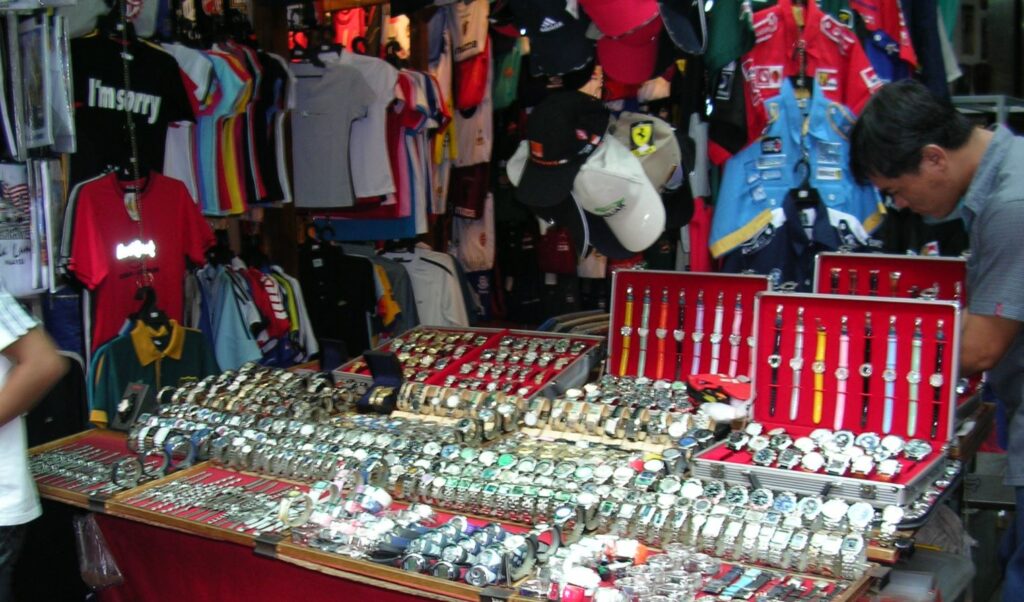
Another bootleg item that Petaling Street is famous for; ‘branded’ watches! For less than RM50, you can get imitation watches from a variety of names such as Rolex, Swatch, Seiko, Casio, Tag Heuer, Gucci, Mont Blanc and Cartier. The ‘Rolex’ watches are in fact, affectionately called ‘Lo-Lek’ watches, which is ‘Rolex’ pronounced with a distinct Chinese slang and used to poke fun at their mimicry.
Other bootleg items to find are the ‘latest’ perfumes from ‘Christian Dior’, ‘Armani’, ‘Polo’ and others, which don’t smell quite as good but you can get them at less than a quarter the price of real scents. Then imitation sunglasses are also very popular and can be had for dirt cheap prices, including ‘Ray-Bans’, ‘Versace’ and ‘Police’.
Souvenirs & Local Arts & Crafts
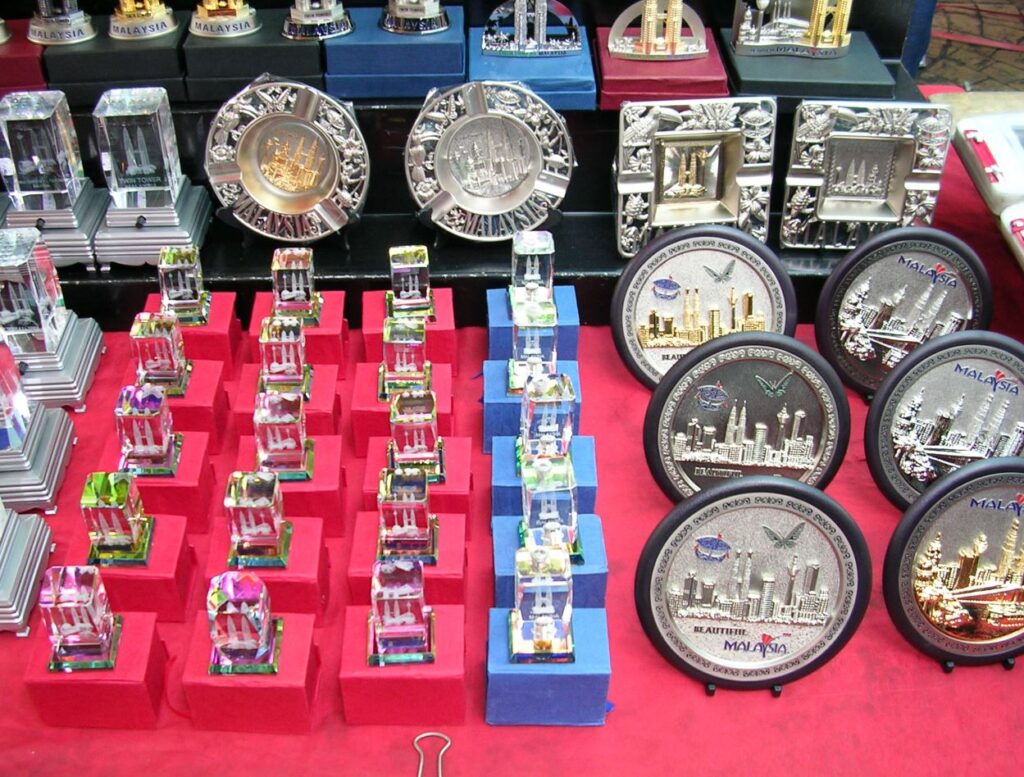
The next best thing are souvenirs and handicrafts. Cultural items, mini replicas of Kuala Lumpur landmarks such as the Twin Towers, shirts with funny captions and lighters in all sorts of shapes (some made to resemble tiny pistols) are available. You’ll be dazzled by the array of colours and many of these items make good presents for those back home.
Bargaining is HISTORY
A good piece of advice to remember in Petaling Street is not to BARGAIN! No price is set in stone, and traders do not inflate prices to enormous proportions like the olden days. You must not haggle or bargain to get the best deal.
Now that you know what Petaling Street has to offer, the final thing you need to do is to simply enjoy yourself. Bask in its atmosphere of noise and colours, enjoy the culinary delights on offer, and shop for amazing things. This is the cultural experience of Kuala Lumpur Chinatown.
People from all races come here
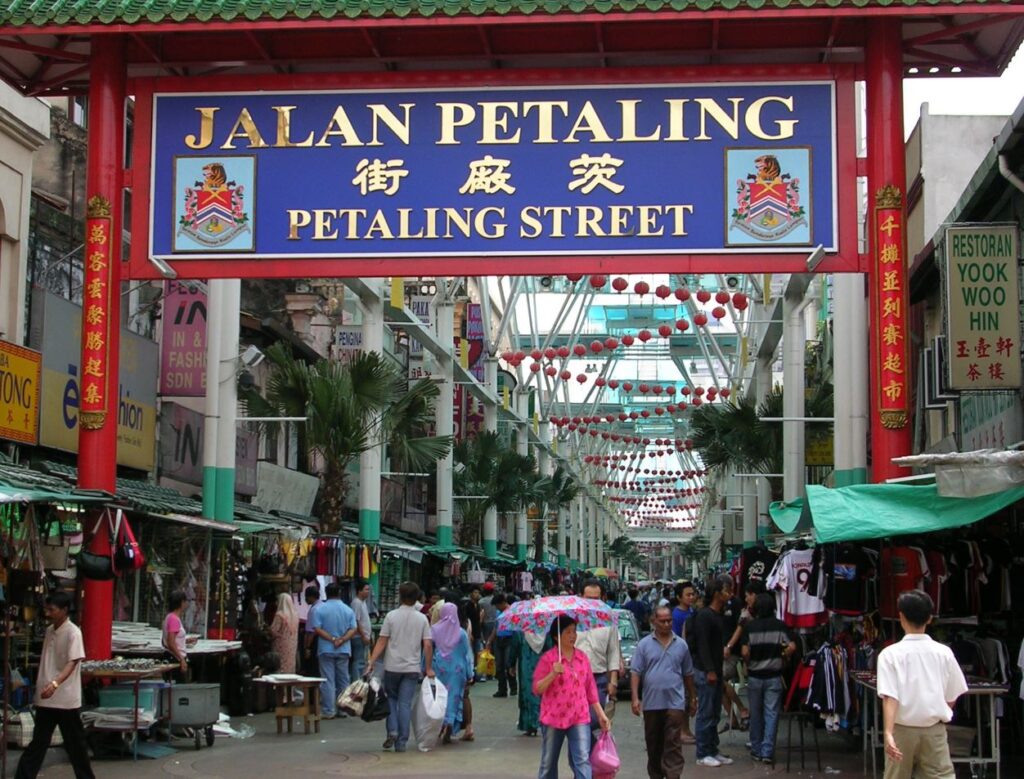
This is Kuala Lumpur’s dedicated Chinatown zone, though you get people of all races and international tourists flocking to this area from afternoon till late night. Easily accessed from the main road of Jalan Cheng Lock, the entrance is unmistakable. Visitors travelling on buses and taxis around Kuala Lumpur are bound to pass this busy road, and thereby, glimpse Petaling Street.
An oriental arch of red and green in marble greets first-time visitors to Chinatown. Entering inside, you will be swept up by the massive crowd of shoppers perusing each stall in the narrow road, as well as be immersed in the din of haggling and traders throwing prices. Not an atmosphere for the claustrophobic, but you’ll certainly enjoy being dazzled by the array of items on sale, as well as feasting on the delightful local food served.
Location & Travel Guide |
|||||||||||||||||
|
Chinatown Shopping Other Areas
Central Market, Kota Raya, Pasar Seni
Besides Petaling Street, there are two other popular shopping areas which are just a few minutes away on foot from Chinatown. Pasar Seni, also called Central Market, is a bazaar for traditional handicrafts and cultural souvenirs, housed within a concrete block. Kota Raya, on the other hand, is one of the oldest shopping complexes in Kuala Lumpur, with a history as varied as the changes it has seen through the years.
Pasar Seni (Central Market)
The Central Market is a cultural shopping complex that is dedicated to the preservation and sale of Malaysia’s traditional handicrafts from all sorts of races, even those from overseas. The Central Market is located a few minutes away on foot from Petaling Street, along the Tun Tan Cheng Lock main road. Visitors coming from the Pasar Seni LRT station will automatically see Central Market in front of them upon coming down the exit escalator.
It was established since 1928, and was once the biggest wet market in Kuala Lumpur (Think raw fish and meats) before it was converted and transformed into a cultural centre by the government. Today, Central Market has been transformed into a shopping arcade with dining outlets, though the emphasis is still on cultural products.
Consisting of a few floors, the complex is filled with traditional handicrafts that are unique to different states in Malaysia. Some of the things you can find are Batik fabrics; a type of Malay garment made of silk, embroidery, rattan baskets, wooden carvings, carpets, brass pottery, pewter items and even contemporary souvenirs such as Malaysian-themed T-shirts and engravings on compact discs or metal plates.
There are a few shops selling computer games and gadgets, but right at the end of the complex is where a collection of artists are gathered. For a fee, these artists will paint or sketch anything from full-blown portraits or caricatures of people, using photos or if you even wish to sit and pose. Most of their works are displayed on the walls, and you can spot their renditions of famous political figures and Hollywood celebrities as well as those in sports.
Kota Raya
This is an old shopping complex that, several decades ago, was one of the most popular shopping spots in Kuala Lumpur. Today, its role has long been superseded by other contemporary mega-malls located in urban areas around the city. However, it still attracts a strong crowd of locals who are in need of budget shopping and recently, underwent a face-lift, giving the mall a golden appearance with a more modern outlook at its location near the end of Tun Tan Cheng Lock Road, just opposite Petaling Street.
A small place, the shopping complex caters to a mixed crowd specialising in hand phone accessories, budget clothing, weird fashion, Audio Visual products, spectacles and shoes. The upper floors are entertainment outlets with arcade games and some illegal gambling machines. If you go further to the back, there are hair salons that sometimes ‘double up’ as prostitution centres for the cheap.
Connected directly next door is the S&M shopping centre, which does not actually stand for ‘Sadism & Masochism’ but an abbreviation of a Chinese name. Like Kota Raya, it has been given a new lease of life with a fresh coat of paint and renovation works. The shopping centre is popular for its many DVD and VCD outlets that sell the latest dramas from overseas, especially from Korea and Hong Kong as well as Japanese anime. However, you can also get other stuff like fashion merchandise and IT products
China Trading Guide – Study and research on the best industry to start with
Do you own a business and wants to trade with Chinese partners? Do you have the regulation know-hows? Check it out here. We provide you with the most complete resource of everything you need to know about starting your business in China.
Check out all the industries that are available and what are your opportunities there. Whether it is in manufacturing, automotive, retail or any other business sectors, look for potential partners or find all the regulations imposed by the Chinese governments for external partnerships.
Guangzhou Business partnerships
If you plan to venture into this business, you must start with an optimistic foothold. This is where you must learn from the Chinese traders because they know all about competition and how this competition can help to grow their businesses. Imagine visiting a shopping mall in Malaysia like Sunway Pyramid.
For any entrepreneur, the mentality to start the business makes a big difference. In fact, it can make or break the venture. To enter a market like China meanwhile will have a lot of challenges because there is the constant public perception that the China market is very difficult and full of hindrances.
But the opportunity for wholesale trading can be an attractive option if you are an entrepreneur and to get you started on the right footing, having the right mentality will surely help. In recent years, Guangzhou has grown to become one of the top wholesale markets in the world. There is almost every type of retail products here but it is here that you will find the most optimistic Chinese entrepreneurs in the world.
What about Pessimists?
When you travel to Guangzhou, having a pessimistic mentality will be your major hurdle. With so many traders located all around the city, you will need to pick and choose the right ones and arrange for delivery and logistics. The main problem with many entrepreneurs is that they become threatened when they see so many businesses in the same field which puts them off from running a similar business. With an optimistic mindset, you will see this as an opportunity instead of a risk.
Most Chinese from Mainland China
Depending on the ancestors of the Malaysian Chinese, they could be Hokkien, Teochew, Hakka, Foochow and others. Most of the Malaysian Chinese are practices ancestral worship which is a form of Taoism and Buddhism while many are also of the Christian faith and some are Muslims.
Mostly from Hokkien, Guangdong & Hainan
Most of the Chinese in Malaysia today are descendant of those who came from China around the fifteenth and the mid-twentieth centuries where the largest group of them are the Min Chinese who came here from the Fujian, eastern Guangdong and the Hainan provinces.
However in the major cities like Kuala Lumpur, Petaling Jaya, Johor Bahru and Georgetown, Cantonese are widely spoken.
Second Largest Ethnicity in Malaysia
The Chinese people arrived at the Malayan shores then to work in the tin mines and plantations under their richer employers. In Malaysia today, they are the second largest group in terms of ethnicity after the Malays. Some distinguished individuals have become national leaders while some have achieved remarkable success in sectors involving business and sports.
Malaysian Chinese demographics
The Chinese community is the second largest ethnic group in Malaysia after the Malays. It was reported in 1835 when the British Malay states showed that the Chinese makes up 8 percent of the total population of the states where they are mainly congregated around the Straits Settlements.
Growing Chinese Population in Malaysia
The Malay community grew rapidly around the 19th and 20th centuries and by 1921, 30% of the population in Malaya were Chinese. This number would continue to grow until they form some 38.4% by 1947. It then continued to grow until recent times where the percentage is reduced with families opting for fewer children due to economical and financial reasons.
Chinese dominated main cities in Malaysia
Records show that there were about 2.66 million Chinese in 1957, the year of Malaysia’s independence and by 2000, there were almost 5.7 million which is 25% of the total Malaysian population. Among all, the southern state of Johor records the biggest percentage of Chinese among its population while Kuala Lumpur, the capital of the country by itself has almost 50% Chinese. The most significant areas in Kuala Lumpur with a large Chinese community are areas like Cheras, Pudu, Segambut, Kepong, Old Klang Road, Sri Petaling and Bukit Bintang while nearby suburbs like Damansara, Puchong, Serdang and Klang too are known to be Chinese dominant areas.
Food Food Food Haven
Each and everytime, when we mention about food in Malaysia, every visitors will know that Malaysia is a Food haven. We have so many type of food from different cultures. The menu is endless.
Today, we just want to talk about Eating Out at Chinatown’s Food Stall
Kuala Lumpur’s Chinatown is a fantastic place for Chinese food, especially hawker stalls and open-air restaurants. In addition, you can get a magnificent variety of cakes, pastries, fruits and sweet drinks from the stalls lining Petaling Street. Almost all the eating areas, in the form of stalls, are concentrated in the middle of Chinatown, which is where Petaling Street intersects with Hang Jebat Road, near a corner book store called ‘Popular’. Unless stated otherwise, all the stalls are open only from the evenings till late night.
Roasted Duck
The whole roasted duck available from Petaling Street is claim to be legendary. Coated in a deep rich brown marinade and crispy to the bite, the roasted duck are sold by a few peddlers on motorbikes and bicycles, stored in thermal glass cabinets. Of particular fame is the ‘’Sai Ngap Chai’, which means ‘Spectacles’ in Cantonese and refers to a one of the traders who wears spectacles. Visitors can order them in whole or part, chopped up into meat pieces and eaten with a tantalising black sauce.(Stall Name” Say Gunn Chai)
Claypot Chicken
This is a quick and simply meal, namely ‘Nga Poh Kai Fun’ in Cantonese, this is a dish that’s served in a small earthen clay pot, consisting of a bottom spread of rice and chicken pieces with ginger and sliced preserved pork sausages. The clay pot is covered and left to cook over a stove, and the final result is an aromatic piece that will warm your taste buds!
Portuguese Grilled Fish
Specially in grill fish over a hot bed of coals with a distinct assam and chilli flavour typical of the Portuguese culinary style. You can select a variety of seafoods to get the grilled treatment, but most would opt for sting ray; grilled to a crispy brown and served with spicy sweet sauce.This is quite spicy and hot
Seafood
The restaurants cum stalls in Petaling Street towards Sultan Road are popular spots for tourists. Here, cooks can be seen blazing away their woks in large flames while tourists sit and chat on tables erected on the road, sipping beer. Patrons can order a variety of cooked local Chinese food, especially seafood. The ‘La-la’ or clams are really popular here, often cooked in a sweet and sour sauce. Other dishes that you should try “Butter prawns, Sweet and sour Crabs, Steam Prawns, steam fish and many more”
Lok Kon / Local B-B-Q meat
‘Lok Kon’ in Cantonese, or ‘Bak Kwah’ in Hokkien, is a popular dried meat delicacy, eaten most during the Chinese New Year festival. However, you can find it available all-year-round in Petaling Street from stalls that ‘dry’ and stock this delicious meat. Lok Kon is made by mashing up pork (including the entrails!) and shredding it with a machine into a gooey paste. The paste is then cut into square-shaped pieces and smoked over a bed of coals. The final result is a delicious combination of sweetness and meaty goodness! My favourite is Chicken meat.
Beef Noodles
The beef noodles are found not in Petaling Street, but just opposite along Tun Tan Cheng Lock Road. From the Petaling Street entrance fronting that road, you can see a corner open-air restaurant cum coffee shop just opposite. It is here that you can get delicious beef noodles cooked in a variety of styles. You can get noodles served with beef meat either in the form of meatballs that sliced into thin pieces, or mashed into crumbs. You can eat it either in soup or ‘dry’, mixed with black sauce. The shop is open only during the day. My recommedation “Lai Fong Beef Noodel stall”
Bah Kut Teh / Pork stew
‘Bah Kut Teh’ is a popular Hokkien dish that’s available under a shady alley along the Petaling Street Road. This dish is made from boiling pig parts, including intestines, heat, liver and tongue in a herbal soup for hours. The end result is a rich aroma and delicious meaty soup, eaten with rice and a ‘Yau Char Kwai’, a type of fried bread-like dough. Those of you who are put off by what goes in it may be pleasantly surprised when you actually try this dish yourself!
Asam Laksa
This is a Nyonya favourite made from blending rice vermicelli with onions, cucumber, chilli, pineapple, lettuce, mint and ginger buds. The whole lot is placed into a thick soup made by blending curry with fish paste into a mushy, gooey like liquid that is both sweet and sour to taste. The taste is extremely sharp and its high tones of sweetness and sourness are truly something that may appeal to you. My recommendation ” Twin Sister stall” at the entrance of Wet Market.
Chee Chong Fun / rice roll
‘Chee Chong Fun’ is another popular culinary entrée; the term actually refers to a collection of meat pastries that is cooked by placing it in boiling soup, drained and eaten with silky strips of white, flat noodles drenched in chilli and black sauce. Most of the Chee Chong Fun items are made with beancurd and meat stuffed into it. This is popular for breakfast and is available only during the day. Served with sweet sauce or hot spicy chilies. Situated at the cross of petaling street
Mata Kuching / Local Lychee
Petaling Street is legendary for this popular local drink; ‘Mata Kuching’ which means Cat’s eye. In actuality, this drink is made from blending three different fruits together which are; ‘Longan’ a grape-like type of fruit grown in Thailand, ‘Tung Kwa’, or winter melon and ‘Loh Horn Guo’ a type of plum-like fruit without a proper name outside the Chinese language. This traditional drink is sold from stalls and has a cooling effect when drunk with crushed ice. You can also drink it hot. The stall is situated next to Hong Leong Bank.
Herbal Soup & Hong Kong Black Jelly
At both ends of Petaling Street there are two traditional herbal shops, which are unmistakable in design having large brass urns and gold-clothed tables inside. These shops sell traditional herbal soup and tea as well as a type of black jelly from Hong Kong. Usually served as dessert. it was claim taht will help to cool down your body and ingestion.